10 Shocking Facts About Russia's Router Hack to Steal Microsoft Tokens
In a sophisticated cyber espionage campaign, hackers linked to Russia's military intelligence have been exploiting old routers to harvest Microsoft Office authentication tokens. This stealthy operation, which peaked in December 2025, affected thousands of networks worldwide. Below are ten essential facts about this alarming attack.
1. The Threat Actor Behind the Attack
The operation is attributed to a Russia-backed group known as Forest Blizzard, also called APT28 or Fancy Bear. This group is part of the GRU, Russia's military intelligence agency. They gained notoriety for interfering with the 2016 U.S. presidential election by compromising the Democratic National Committee and Hillary Clinton's campaign. Their latest campaign demonstrates a shift from traditional malware to network-level attacks, targeting authentication mechanisms that many organizations rely on.

2. The Scale: Over 18,000 Routers Compromised
At the height of the campaign in December 2025, Forest Blizzard had compromised more than 18,000 internet routers. This massive network of compromised devices allowed them to intercept data from over 200 organizations and 5,000 consumer devices. The attack was remarkably widespread, affecting networks across multiple sectors including government ministries and third-party email providers.
3. No Malware Needed – DNS Hijacking Was Key
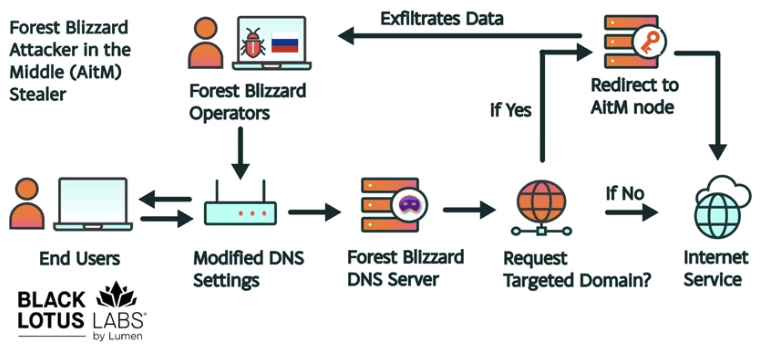
One of the most striking aspects is that the hackers did not install any malicious software on the targeted routers. Instead, they exploited known vulnerabilities to change the Domain Name System (DNS) settings. By pointing the routers to DNS servers they controlled, they could redirect traffic to fake websites designed to steal login credentials and authentication tokens. This technique, called DNS hijacking, allowed them to operate stealthily without leaving typical malware traces.
4. Old Routers Were the Main Target
The hackers focused on unsupported or end-of-life routers, particularly from vendors like MikroTik and TP-Link. These devices are commonly used in small offices and home offices (SOHO) but often lack critical security updates. The attackers leveraged known flaws to gain access, highlighting the risks of using outdated networking equipment. Organizations relying on such routers were especially vulnerable.
5. OAuth Tokens: The Prime Prize
The goal was to intercept OAuth authentication tokens from Microsoft Office users. OAuth tokens are digital passes that allow users to access services without repeatedly entering passwords. Once stolen, these tokens could be used to impersonate users and gain unauthorized access to email, files, and other sensitive data. The attack did not require breaking into Microsoft's systems—it exploited the token exchange process when users accessed legitimate services.
6. Over 200 Organizations and 5,000 Consumers Affected
Microsoft reported identifying more than 200 organizations and 5,000 consumer devices caught in the campaign. The victims included ministries of foreign affairs, law enforcement agencies, and third-party email providers. This wide range shows that both high-value government targets and everyday consumers were impacted, making it a significant threat to national security and personal privacy.
7. The Role of Security Researchers
Researchers at Black Lotus Labs, part of internet backbone provider Lumen, uncovered the campaign. They observed unusual DNS activity and traced it back to the compromised routers. Ryan English, a security engineer at Black Lotus, explained that the attackers re-used known vulnerabilities rather than developing new exploits. Their work, along with Microsoft's analysis, helped expose the scale and technique of the operation.
8. Links to Previous APT28 Activity
Forest Blizzard is the same group that carried out high-profile attacks in the past, including the 2016 Democratic Party breaches and the Olympic Destroyer malware. This latest campaign shows their evolving tactics—moving from malware-based attacks to network-level manipulation. The use of router vulnerabilities suggests they are adapting to modern defenses that focus on endpoint detection.
9. Stealthy and Simple: A Dangerous Combination
The attack was both simple in execution and stealthy in nature. By avoiding malware, the hackers reduced the risk of detection by antivirus software. The DNS hijacking allowed them to intercept tokens from all users on a compromised network without installing anything on individual devices. This made the campaign difficult to discover, and it likely went undetected for months.
10. How to Protect Against Similar Attacks
Organizations can mitigate such threats by keeping router firmware updated, replacing end-of-life devices, and monitoring DNS traffic for unusual patterns. Using DNS security extensions (DNSSEC) and segmenting networks can also help. For individuals, using a VPN and enabling multifactor authentication (MFA) adds extra layers of protection. Awareness of DNS hijacking risks is crucial in today's threat landscape.
In conclusion, the Forest Blizzard router hack underscores the evolving nature of cyber espionage. By targeting foundational internet infrastructure like DNS and authentication tokens, state-backed actors can silently compromise vast networks. Staying vigilant with updates and security best practices is our best defense against such sophisticated threats.
Related Articles
- 10 Critical Facts About the ShinyHunters' Canvas Login Portal Hack
- 10 Things You Must Know About the Bleeding Llama Vulnerability Threatening 300,000 Ollama Deployments
- How to Leverage OpenAI's Daybreak Platform for AI-Driven Cyber Defense
- 2025 Zero-Day Exploitation: Key Findings and Evolution
- Germany Becomes Europe's Prime Target for Cyber Extortion in 2025, Data Shows
- How Russian Hackers Exploited Routers to Steal OAuth Tokens: A Step-by-Step Breakdown
- How GitHub Responded to a Critical Remote Code Execution Vulnerability in the Git Push Pipeline
- How to Secure AI Credentials in Your Cloud Environment: A 2026 Guide to Preventing Shadow AI Risks