Exclusive Early Look: Google's Aluminium OS Leak Reveals Desktop Ambitions
Just hours before Google’s The Android Show: I/O Edition takes the virtual stage, a detailed leak has surfaced, giving the public an unprecedented glimpse into what the company has been working on behind closed doors. Dubbed Aluminium OS, this operating system is widely believed to be Google’s push to bring a more desktop-like experience to Android. The leak, courtesy of leaker Mystic Leaks, includes a 16-minute hands-on video, multiple screenshots, and a thorough breakdown of the OS’s current state.
We’ve combed through the material to bring you a structured overview of the most important findings. Below, we dive into the standout features, the overall feel of the software, and what it signals for Google’s broader strategy. If you’re in a rush, jump straight to the sections that interest you:
Key Features in the Leaked OS
Bottom App Dock
One of the first things noticed in the video is a persistent bottom app dock. Unlike the typical Android launcher, which places favorites near the bottom but still leaves space for widgets, Aluminium OS dedicates a permanent bar to frequently used applications. This dock resembles what you’d find on Chrome OS or a traditional desktop operating system, suggesting Google is aiming for a more familiar multitasking environment on larger screens.
Compact Side-Sliding Quick Settings
The Quick Settings panel has been redesigned as a compact side-sliding interface. Instead of the full-screen overlay seen in tablet implementations, Aluminium OS uses a narrow panel that slides in from the right. This allows users to adjust brightness, toggle Wi-Fi, and access other shortcuts without completely leaving the current app. It’s a space-saving approach that feels at home on a wide monitor.
Virtual Desktops in the Recents View
Perhaps the most desktop-like addition is the integration of virtual desktops directly into the Recent Apps screen. By swiping up and accessing the task switcher, users can now create, switch, and manage multiple workspaces. This moves beyond simple split-screen multitasking and hints at Aluminium OS being designed for people who juggle numerous apps simultaneously.
“Link to iOS” App
An app called Link to iOS appeared in the leaked footage. While its exact functionality is still uncertain, the name strongly suggests that Google is working to improve cross-platform continuity between Aluminium OS and Apple’s ecosystem. This could involve file sharing, clipboard sync, or even call/message relay – a move that would position Aluminium OS as a more open alternative to the walled gardens of iOS and macOS.
Current State of the OS – “Plain Android” for Big Screens?
Despite its slick new features, the leaked build appears to be in an early stage. According to the leaker, the overall experience feels like “plain Android” that has been optimized for larger displays rather than a ground-up desktop operating system. Many of Google’s own apps – such as Gmail, Google Drive, and even Chrome – are rendered as web-wrapped versions inside a container, rather than as native desktop applications. This means they lack the tight integration and keyboard shortcuts that users of Windows or macOS take for granted.
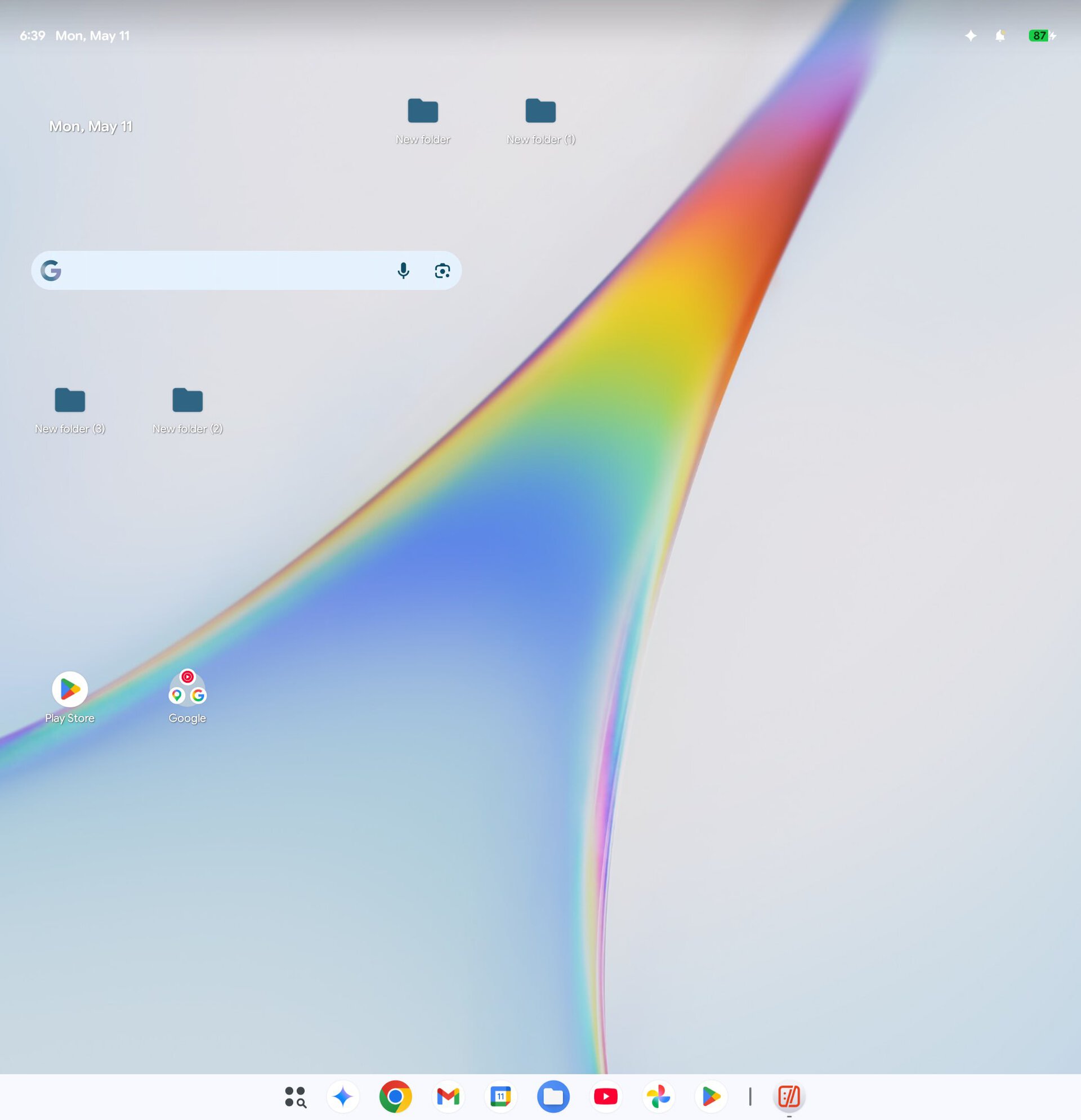
The interface itself is clearly Android at its core. The settings menu, notification tray, and app launcher all retain their mobile DNA. However, the bottom dock and virtual desktops are strong signs that Google is iterating quickly. It’s likely that later builds will see more native app development as the platform matures.
What This Means for Android on Desktops
Google’s I/O event later today is expected to shed more light on the Aluminium OS roadmap. This leak confirms that the company is serious about bridging the gap between mobile and desktop computing. By borrowing the best elements from Chrome OS and Android, and adding new productivity-focused features, Aluminium OS could become a viable option for users who want a single operating system across phones, tablets, and desktops.
The inclusion of a “Link to iOS” app also signals an unusual willingness to play nice with rival platforms. If Google can deliver seamless interoperability, it might attract users who are otherwise locked into Apple’s ecosystem but prefer Android’s flexibility.
Of course, much depends on app developers. For Aluminium OS to succeed, Google will need to convince developers to build native desktop apps or at least optimize their web apps for larger screens and mouse input. The web-wrapped approach shown in the leak is a stopgap, not a long-term solution.
We’ll be watching today’s announcements closely. For now, this leak offers the clearest picture yet of Google’s desktop ambitions – and it’s an exciting one for anyone who has ever wished their Android phone could feel more like a real computer.
Related Articles
- Executive Moves in Biotech: A Guide to Tracking, Reporting, and Analyzing Leadership Changes
- 5 Essential Samsung Messages Features Google Messages Has Yet to Match
- Mastering the iOS 26 Phone App: How Two Powerful Features Simplify Calling
- React Native Now Available on Meta Quest: A Game-Changer for VR App Development
- Swift Powers TelemetryDeck's 16M Monthly Users: A Case Study in Server-Side Swift at Scale
- Snapseed 4.0 Arrives on Android: A Major Overhaul After Years of Silence
- Apple Q2 2026 Earnings: How to Tune In and What to Expect
- Migrating from CocoaPods to Swift Package Manager in Flutter: A Step-by-Step Guide