Google TV Introduces Pointer Remote Support for Faster, More Intuitive Navigation
A New Era for Google TV Navigation
At the start of Google I/O 2026, the Google TV team announced an exciting update that promises to transform how you interact with your smart TV. The highlight is the introduction of pointer remote support, a feature that allows you to control the interface with the fluidity of a computer mouse—much like using a Wiimote on the Nintendo Wii. This development is aimed at making navigation faster and more intuitive, especially for content-heavy menus and search functions.
What Is a Pointer Remote?
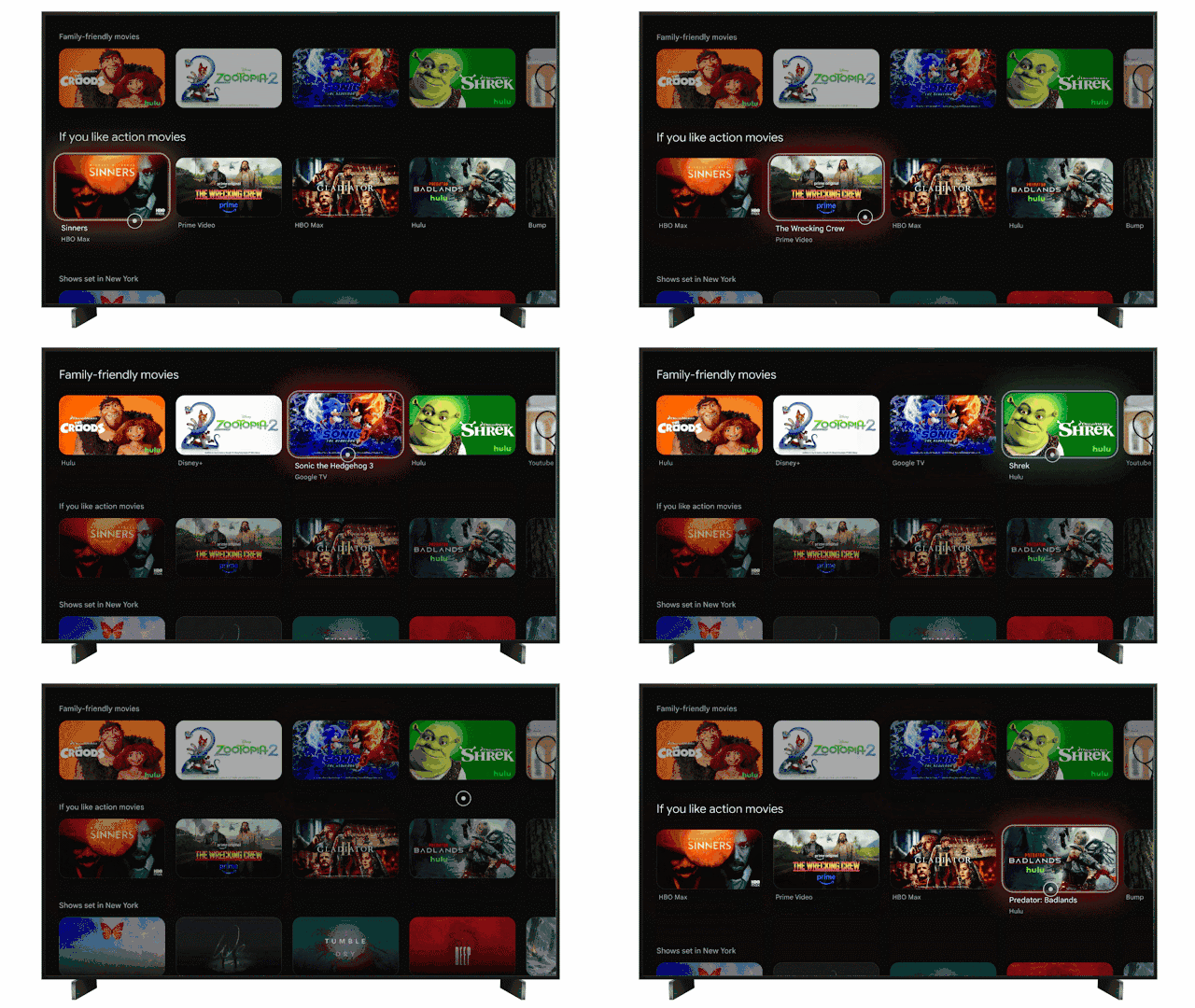
A pointer remote works by translating physical movements of the remote control into on-screen cursor actions. Instead of pressing directional buttons repeatedly, you can simply point and click to select items, scroll through lists, or interact with text fields. This technology has been popularized by gaming consoles and is now coming to Google TV to enhance the user experience.
How It Differs from Traditional Remotes
Traditional remotes rely on directional pad (D-pad) navigation, which can be slow and cumbersome when browsing extensive libraries or web content. With pointer support, you can glide across the screen quickly, making it feel more like using a laptop trackpad or a smartphone. The result is a more natural, less frustrating way to get around your TV.
Key Benefits of the Pointer Functionality
- Reduced Navigation Time: No more tapping through dozens of rows to find a specific app or movie.
- Improved Accuracy: Clicking exactly what you want without overshooting or mis-hitting adjacent buttons.
- Better Text Input: Typing on an on-screen keyboard becomes faster as you can point directly to each letter.
- Seamless Web Browsing: For users who access the internet on Google TV, pointer control makes links and buttons more accessible.
How the Feature Works
The pointer remote uses built-in motion sensors (such as gyroscopes and accelerometers) to detect the angle and movement of the remote in your hand. When you raise the remote, the TV screen displays a small cursor that follows your hand’s motion. A button press then confirms a selection. The system is designed to be responsive and requires minimal calibration—just like picking up a Wii controller and starting to play.
Backward Compatibility and Setup
Google has confirmed that the new pointer feature will work with future Google TV remotes that support motion control. However, some existing remotes with built-in sensors may also be compatible via a software update. The setup process is expected to be straightforward: users will enable the option in the “Remote & Accessories” settings menu. Once activated, the pointer will appear whenever the remote is moved, and it can be turned off for traditional operation.
Launch Timeline and Availability
According to the announcements made at Google I/O 2026, the pointer remote functionality will roll out gradually. Google TV devices from major manufacturers—such as Sony, TCL, and Hisense—are likely to receive the update later this year. Some new Google TV streaming devices may also ship with the feature pre-enabled. Google has not yet specified an exact date but emphasized that development is complete and testing is underway.
What This Means for Everyday Users
For the average viewer, this change could be the biggest leap in TV navigation since the introduction of voice search. Pointer remote support addresses a long-standing pain point: the slow, linear scrolling required by standard remotes. Whether you’re flipping through Netflix, adjusting YouTube playback settings, or using a web browser, the pointer saves time and effort. It also makes Google TV more accessible for people who may find repeated button pressing difficult.
Conclusion
Google’s plan to bring pointer remote support to Google TV marks a significant milestone in smart TV interaction. By borrowing a proven concept from gaming consoles, the company is making navigation faster, more intuitive, and much more enjoyable. Keep an eye on your device’s settings menu in the coming months—you may soon be pointing and clicking your way around the TV like never before.
For more details, check out our coverage of Google I/O 2026 and the latest Google TV updates.
Related Articles
- 5 Critical Facts About the Coming 'Super El Niño' and Its Global Fallout
- Anthropic Unveils 'Dreaming' Feature for Claude Managed Agents: Scheduled Memory Review in Research Preview
- Skywind Development Update: Progress and Challenges on the Road to Release
- Windows 11 Interface Overhaul: How to Master the New Start Menu and Taskbar Fixes
- Exploring DuckLake 1.0: A SQL-Centric Data Lake Format
- Transform Your Old Google Home Mini into a Smart Home Hub with Home Assistant
- 17th-Century Maryland Grave Reveals African American Child Buried Among White Colonists – Enslavement Status Unknown
- From Gas to Electric: How a Family Car Upgrade Became a Lifestyle Shift